La isla de Man es un pequeño territorio ‘offshore’ entre Irlanda e Inglaterra. No pertenece a la UE, pero sí al Reino Unido, que le proporciona defensa y política exterior. Pese a contar con solo 75.000 habitantes, ha demostrado tener orgullo. Al menos uno de sus jueces, que ha amenazado a un grupo de jubilados británicos que pleitean en Marbella contra una de sus empresas, Old Mutual Isle of Man, a la que acusan de timarles con un producto financiero complejo —otro más— vendido a jubilados británicos en la Costa del Sol. Según el juez, si siguen adelante en España, se enfrentan a penas de prisión o al embargo de sus bienes en el Reino Unido, y lo mismo sus abogados e incluso el personal del juzgado.
La Costa del Sol es el paraíso de las estafas a británicos. Decenas de miles de expatriados viven en su burbuja, sin conocer el idioma ni las leyes españolas, y a menudo se fían de compatriotas y de sus productos financieros. Algunos han sufrido el rigor de la piqueta española, otros contrataban hipotecas inversas con Rothschildque han acabado en los tribunales y otros dejaban sus ahorros en manos de Naughty Nigel, un pícaro jugador de póquer que decía invertir en bolsa con un ojo de águila… Hay infinidad de ejemplos.
La Costa del Sol es el paraíso de las estafas a británicos. Decenas de miles de expatriados viven en su burbuja, sin conocer el idioma ni las leyes
Otros invirtieron en Old Mutual Isle of Man, una compañía aseguradora que les vendía un producto financiero complejo desde Man, un territorio ‘offshore’ con miles de empresas. Cuando la inversión fue mal, recurrieron a los tribunales españoles, que han condenado a bancos y chiringuitos financieros a devolver el dinero en cuanto el nivel del cliente era el de un inversor medio.
Así lo hicieron una pareja de expatriados, periodista y fisioterapeuta, afincados en Marbella. El 31 de julio pasado presentaron una demanda reclamando la nulidad del seguro de vida con Old Mutual en un juzgado de Marbella. Su abogado, Juan Martínez Soler, del despacho Lawbird en Marbella, alegaba que la Isla de Man no es territorio de la UE y que aunque el contrato estipulaba que las diferencias se resolverían allí, esa cláusula es nula, como tantas abusivas en estos contratos.
Miles de expatriados británicos y alemanes viven en la Costa del Sol. (EFE)
En la demanda esgrimían que Old Mutual nunca estuvo autorizada en España a operar como agente de seguros pese a que los ofrecía desde una oficina en Marbella a través de mediadores como ASF Europe Alliance. Según el escrito, “la información disponible al público en lo relativo a las autorizaciones para operar en España es objetivamente falsa”. ASF Europe Alliance, que los comercializaba, está registrada como una empresa de publicidad, pero ni la CNMV ni la dirección general de seguros tenía constancia de ellos, según aportaron los demandantes.
Estos habían contratado en 2011 una póliza llamada ‘executive investment bond’, una póliza de vida en que, al fallecer el asegurado, los beneficiarios del seguro reciben lo invertido más un 1%. En total, invirtió allí 688.000 libras esterlinas (unos 780.000 euros), de las que fue retirando 490.000 libras, por lo que le reclama las 198.000 libras (207.000 euros) que le faltan. En la demanda, los inversores sostienen que no entran a valorar cómo movió el dinero Old Mutual —eso sería “como intentar establecer la mala praxis de un falso cirujano”— sino en que no tenía ningún permiso para operar en España. Reclaman que el contrato era abusivo, al imponer un juez en la Isla de Man y no en Marbella para dirimir las disputas.
Además, la ley de seguros establece que “serán nulos de pleno derecho” los contratos realizados por entidades no registradas, como sería el caso de Old Mutual en España. El juzgado de Marbella admitió a trámite la demanda y comenzó el lento peregrinar que tienen estas cosas. Hasta ahí, sería un caso más de británicos reclamando en la Costa del Sol un dinero perdido en extrañas inversiones ‘offshore’ (hay bancos daneses y empresas con sede en Gibraltar en pleitos parecidos).
La ley de seguros establece que “serán nulos de pleno derecho” los contratos realizados por entidades no registradas
Pero el pasado enero el guion dio un giro inesperado. Old Mutual presentó su propio escrito en un tribunal de la Isla de Man para paralizar las actuaciones judiciales en España. Y les dieron la razón. El 31 de enero, el alto tribunal de la Isla de Man emitió un aviso penal en el que avisaba al matrimonio que, de seguir su demanda en España, podrían verse condenados “por desacato, ser encarcelados, multados o tener sus bienes embargados”.
No solo eso, sino que el juez avisaba de que lo mismo le podría ocurrir a “cualquier otra persona que conociendo esta orden ayude” a los demandantes. En último extremo esto incuso se aplica al personal de Justicia español. “Es absurdo, la Isla de Man amenazando al tribunal español con acciones penales. Es lo nunca visto”; razona Antonio Flores, director de Lawbird. El juzgado de Marbella analiza ahora la competencia sobre el caso.
Un portavoz de Old Mutual afirmó por correo electrónico que no intentan disuadir a nadie del pleito, pero que debe realizarse en la Isla de Man: “Old Mutual International no intenta evitar que los pleitos sigan. El juicio solo afecta a dónde debería verse la demanda, y el alto tribunal de la Isla de Man ha ordenado que sea en la Isla de Man. Cualquier riesgo posterior surge del rechazo continuado a cumplir una orden del Tribunal Supremo. Este rechazo es lamentable, pero no tiene nada que ver con Old Mutual International”.
Un enorme cartel publicitario en la ladera de la montaña daba la bienvenida a Marbella. “Bienvenido a territorio MacAnthony”. MacAnthony es Darragh MacAnthony, un halcón del negocio inmobiliario nacido en 1976 en Dublin que desde la Costa del Sol vendía promociones en España, Bulgaria, Marruecos, Turquía o Cabo Verde. En el Reino Unido es famoso por tuitear contra los futbolistas del club que posee, el Peterborough United, en la tercera división inglesa, pero en la Costa del Sol lo conocen las decenas de británicos que le han denunciado por estafa con las promociones inmobiliarias con las que, dicen, les sacaba el dinero. Denuncian que la sociedad de MacAntonhy se esfumó de la noche a la mañana gracias a un nonagenario que asumió la titularidad llamado Fernando A. del Olmo, sobrino del asesor fiscal de la ‘jet’ investigado por seis juzgadosJoaquín de A.. Fútbol profesional, Marbella, testaferros, Papeles de Panamá… Aquí no falta de nada.
El juzgado de instrucción 4 de Marbella investiga desde 2011 a MacAnthony y a su sociedad MacAnthony Reality International Spain. Decenas de británicos se querellaron contra él por estafa, blanqueo y apropiación indebida. Denuncian que les vendía casas en lujosas promociones prometiendo “una revalorización anual del 15%”. Aseguran que no solo cobraba anticipos por las viviendas, que en unos casos no llegaban a terminarse, sino que les cobraba otros servicios auxiliares con otras empresas. “MRI Lifetime, que es un servicio de instalación y mobiliario de los apartamentos, costaba 265 euros al año. Sorprende que les haga pagar por la instalación de muebles y el mantenimiento de la vivienda incluso mucho antes de que la misma esté construida”, sostiene la querella del abogado Sergio García Bravo, que su sumó al procedimiento el verano de 2016.
La maraña ‘offshore’ de A.: seis juzgados cercan al asesor de la ‘jet’
Esta es la historia de un abogado, inspector y asesor fiscal, escritor y filósofo que habría hecho posible el desvío de fondos del caso Bahía
El pleito lo comenzó el abogado Luis Fernando González, del despacho Lawbird, especializado en Marbella a defender a británicos de las múltiples estafas que han sufrido. En nombre de 49 compradores les denunció por apropiación indebida y/o estafa por unos muebles que, decían, nunca llegó a proporcionarles y por los que reclamaban 492.495 euros.
El abogado de MacAnthony, Enrique Fernández de la Lama, resta importancia al asunto: “Es la reclamación de unos clientes por la compra de unos muebles. Ya hemos justificado que fue porque llegó la crisis inmobiliaria. Fue a pesar de haber invertido más dinero del que se recibió de los clientes”. Este considera que lo lógico es que el procedimiento penal se archive y la reclamación siga otro curso.
Los demandantes no solo iban contra Darragh MacAnthony. Se dirigían también contra un hombre de 90 años llamado Fernando A. del Olmo. Sostenían que era “formalmente el administrador único de la mercantil Inmobiliaria Vasco Peruana, la cual es, a su vez, también formalmente, la administradora única de la española MacAnthony Reality International Spain” (MRIS). Señalaban que dada la falta de movimientos económicos de la Inmobiliaria Vasco Peruana esta daba la impresión de ser “una empresa meramente instrumental”.
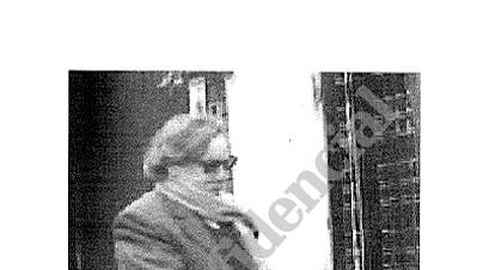
Joaquín A., fotografiado por la policía en Madrid.
El argumento del abogado González es que MRIS desapareció en esa empresa para que no hubiera a quién reclamarle el dinero. Y que A. era solo un hombre de paja al que jamás se lo podrían reclamar responsabilidades. MRIS quedó liquidada en 2012. En un columpio de altas y bajas en el registro mercantil, la sociedad estaba en manos de Inmobiliaria Vasco Peruana SAC desde el año 2005. Esta sociedad tiene sede en Perú y, aparentemente, no tiene ninguna conexión con Macanthony.
Sin cartel en la puerta
La declaración de Fernando A. en el juzgado confirmó que efectivamente él tenía poco que ver en el negocio. Allí afirmó “que un sobrino suyo es asesor de MRIS y le invitó a tener un cargo como director de esta empresa para agilizar los trámites de esta ya que los socios de la entidad no residían en España y él sí”. Añadió que “por este cargo le pagan 600 euros al mes y que su sobrino se llama Joaquín de A. “ y admitió que “escapa a su control la actividad real de la empresa MRIS”, que él confió en su sobrino, que era quien le decía dónde tenía que firmar.
Los vínculos entre MacAnthony y Fernando A. llegan a las Seychelles
El nombre de Joaquín A. quedó colgando en esa declaración. Nadie tiró del hilo. Era el asesor fiscal de MRIS y el que nombró a un nonagenario para que firmara. En otros seis juzgados de Cádiz y Madrid hay huellas de A., aunque en esos sí está siendo investigado, según una investigación de El Confidencial. Se trata de un inspector de Hacienda en excedencia y asesor fiscal de la jet. Está investigado por ayudar a miembros de la buena sociedad madrileña a fingir su residencia fiscal en el exterior, como tres hermanos Cotoner, tres hijos del exjefe de la Casa del Rey, y Enrique Maestre Cavanna, hijo del promotor Tomás Maestre. Según la investigación sobre el desvío de fondos públicos del dinero de la Bahía de Cádiz, Fernando A. era utilizado como testaferro habitual por Joaquín A.. La dirección de varias sociedades en las que participa la peruana en España es calle Azulinas 7, en Madrid, local identificado como centro de los negocios de Joaquín A. en Madrid.
Fernando A. también era titular de una sociedad offshore que acabó en manos de MAcAnthony.
Cuando los abogados de los denunciantes de Marbella fueron a Madrid a ver la sede desde la que supuestamente se controlaban las inversiones en la costa vieron un portal anodino sin cartel en la puerta. Nada que ver con la pomposa sede de MRIS en Marbella años antes, ante la que a menudo estaban aparcados coches de lujo. El abogado de MacAnthony, Enrique Férnández de la Lama, ve perfectamente lógica la relación: “El sobrino de Fernando A. le llevaba temas fiscales y como no estaba aquí en España puso en el consejo de administración a Fernando, pero no ha tenido nada que ver como MRIS”. Este sostiene, en contra de los denunciantes, que la Inmobiliaria Vasco Peruana no tiene nada que ver con las firmas de MacAnthony.
“Pasadlo a Mossack Fonscea”
El mismo papel de ‘prestanombre’ para la red societaria de su sobrino es el que Fernando de A. tiene en las decenas de sociedades registradas en paraísos fiscales y creadas por el despacho de abogados Mossack Fonseca, a cuya base de datos este diario tiene acceso en el marco de la investigación de los Papeles de Panamá. En medio de los once millones de documentos que la componen es donde se halla la conexión ‘offshore’ entre A. y MacAnthony.
Constitución de Jaguar Capital en los Papeles de Panamá.
Los vínculos entre MacAnthony y Fernando A. no se limitan a que el nonagenario pasó a controlar formalmente la inmobiliaria de Marbella. Se replicó idéntico a miles de kilómetros de distancia, en las islas Seychelles. El nombre de Fernando figuraba como accionista de la sociedad Jaguar Capital Limited hasta 2005. En 2006, esta compañía se utilizó para abrir una cuenta bancaria en Suiza a nombre de Natalie MacAnthony, la esposa de Darragh. Lo mismo hicieron ese año con cientos de sociedades para burlar un actualización de la ley europea sobre secreto bancario. La mujer del magnate del fútbol figura como “beneficiaria final del 100%” de la sociedad incluso en documentos de 2015.
El mismo Darragh intervino para agilizar los trámites. En un correo de finales de 2013 pide a su asesor que “pase los documentos a los de Mossack Fonseca, para asegurarnos de que todo esté bien hecho”. Y es que la sociedad tenía un fin declarado, gestionar una propiedad en Ascot, a las afueras de Londres. En marzo de 2016, la propiedad se vendió por 2,3 millones de libras, algo más de 2,6 millones de euros.
Un cartel de Darragh MacAnthony daba la bienvenida a la Costa del Sol.
El imperio de MacAnthony en la Costa del Sol es historia. Pero sus perseguidores son tenaces. Los abogados de Lawbird han encontrado la mansión que posee en Marbella, un enorme chalé de 2.500 metros en una parcela de 8.000 en la Sierra blanca. La llaman el mirador, por las vistas, y está a nombre de una sociedad. “¿Si las inmobiliarias quebraron y no pudo pagar a los que le compraron los muebles cómo se está pagando esa mansión? ¿Quién paga esa hipoteca?”, se pregunta el abogado Luis Fernando González, que critica las maniobras societarias de MacAnthony, que no llevó sus empresas a concurso de acreedores. Estos recuerdan el gusto por el dinero de MacAnthony con una declaración de hace unos años: “Estaría desolado si en cinco año no atesoro un patrimonio de al menos mil millones de euros”.
More than 1,000 buyers from the UK and Ireland lost £45m after Birmingham- based Ocean View Properties (OVP) was formally dissolved in 2009. OVP was the exclusive agent for the Manilva Gardens luxury holiday complex in Estepona on the Costa del Sol. It was behind successful overseas property enterprises, but ran into difficulties as UK agent for Spanish developer Ricardo Miranda Miret. A claim for fraud and misappropriation of funds was lodged in February 2011 in a bid to recover deposits paid by investors to OVP. It has more than 50 Northern Irish investors among 120 claimants for £9.2m. A second class action complaint for £2m, brought by 30 British and Irish investors, was filed in 2013. Many Northern Irish investors remortgaged homes to finance their dream luxury buys. One local investor was Armagh ex-teacher Ollie Reel, who now works for a firm helping investors to recover their lost money. Mr Reel and his three brothers sank thousands of pounds into the deal, but have managed to get some of it back.
“It started in 2006 and through a few good friends, mainly in GAA circles, they invested in Spain and I was persuaded at that time it could be good for me as well and I couldn’t lose out,” he told an Irish radio station. “The economy was booming and everyone was going mad buying property, like everyone else I got caught up in the euphoria of it all. “If only I had known what was ahead of me, I would never have considered it. “The investment I was involved in was in Estepona in Spain and there was about 100 of us on both sides of the border, I suppose we lost a combined €12m.
“These apartments were all fully furnished, they were very good at advertising it, they flew groups of us down to Spain and we stood on the actual site and we were all taken in by owning a new property in Spain.” He added: “The company went bust and it was down to the fact that the developer who was building our property hadn’t even got a building licence.” Mr Reel explained that after going through Spanish lawyers, he eventually was able to recover around half of his £145,000 deposit through a group called the Claims Bureau. He now works as a consultant for the group. The Madrid High Court probe has been beset by delays and setbacks. An investigating judge was replaced after he was found to have family ties to Mr Miranda Miret. In the latest twist, the developer is accused of submitting forged documents in the criminal action.
A spokesman for Marbella- based legal firm Lawbird said: “By using these documents, supposedly signed by the secretary of Ocean View in Spain, the developer tried to prove that they had formally notified the estate agent that it was not possible to continue selling apartments as no licences were in place and they didn’t own the land where the development was to be built.” Final witness statements for OVP are to be given on Wednesday. Following these submissions, the judge will decide if the case should proceed to trial. Mr Miranda Miret and others accused have all strongly denied any wrongdoing. Former Aston Villa captain Gareth Barry and BBC’s Homes Under The Hammer star Martin Roberts, who starred on I’m a Celebrity, were among those duped into marketing luxury off-plan apartments for the firm, though neither benefited in any way, or had any knowledge of the alleged irregularities.
Court of First Instance 11 in Bilbao has ruled that twelve mortgage loans valued at six million euros, granted to British families mostly in Malaga province between 2004 and 2007, should be declared void.
The case was dealt with in Bilbao as all loans were granted at a notary in the city, and the representatives of the lender, SL Mortgage Funding nº1 Limited (SLMF), were also based in the Basque city, according to Lawbird Legal Services SLP.
These loans were sold to attain a reduction in potential inheritance tax, inasmuch as the mortgage would reduce the taxable value of the property, but also to supplement the modest pensions received by the owners of the properties.
SL Mortgage Funding nº1 Limited (SLMF), based in Chester (UK), had not applied for the necessary regulatory permits to legally raise funds from the public and provide an investment service – activities reserved and regulated by the Bank of Spain and the CNMV (financial regulator).
In spite of not having any of the above authorisations, SLMF would lend but at the same time retain most of the proceeds of the loan, which would then be invested by the company.
The ruling declares that “infringing the protocols set by the relevant administrative authority to supervise the disputed product is a regulatory violation that exceeds that of a mere breach of banking laws, such as misselling, so profusely dealt with recently in relation to the massive sale of complex financial products.”
The judge who presided over this case concluded that the breach of public policy “is far more serious” as it made a mockery of a whole system of financial and banking supervision designed to prevent abuses to consumers and protect the stability of the sector. He likened this behaviour “civil fraud”, which is any proposal that contravenes mandatory regulations or has a false or forbidden reason.
The sale of this product was conducted via commission-earning financial advisory firms (Hamiltons Financial Services, Henry Woods Investment Management and others), based in Estepona, Marbella and Fuengirola. SLMF also recommended a network of lawyers which would downplay the extent of the lack of licensing requirements of the bank and the product.
According to Lawbird Legal Services SLP, working on behalf of the claimants, the ruling confirms that “operating in breach of mandatory banking and financial regulations makes the offender a ‘boiler room’, even if the company was legally operating in its own country”. It also allows the victims to “end the nightmare” which has blighted the victims for over ten years.
The judge concluded by saying that all contracts and agreements executed between the clients and the bank should be terminated, but also applied the laws of contractual termination in a novel way with the clients able to claim back everything they had put in without having to return what was given to them.”
El juzgado de Primera Instancia número 11 de Bilbao ha declarado la nulidad radical de doce hipotecas inversas que se concedieron a familias británicas radicadas en la provincia de Málaga entre 2004 y 2007, por un importe de seis millones de euros.
Este juzgado conoció del asunto al haberse firmado en una notaría de Bilbao todos los contratos y estar allí domiciliados los representantes del banco, ha informado el bufete de abogados Lawbird Legal Services en un comunicado.
Dichos préstamos se vendían con la finalidad de evitar el Impuesto de Sucesiones toda vez que, supuestamente, la hipoteca debía reducir el valor de la vivienda y, por otro lado, el resultado de la inversión del préstamo complementaría los ingresos que recibían a las limitadas pensiones.
La prestamista, SL Mortgage Funding nº1 Limited (SLMF), radicada en Chester (Cheshire, Reino Unido), no había obtenido la pertinente autorización para captar fondos reembolsables del público y prestar servicios de inversión, actividades reservadas y reguladas por el Banco de España y la Comisión Nacional del Mercado de Valores (CNMV).
A pesar de ello, la citada entidad prestaba, pero captaba el importe del préstamo posteriormente y lo invertía en fondos seleccionados previamente por ella misma.
La sentencia declara probado que “esta forma de actuar infringiendo los controles de las autoridades competentes para comercializar en España el producto litigioso va más allá de un mero incumplimiento de determinados deberes, como el de información, profusamente tratado en los últimos tiempos en relación a la comercialización de productos complejos”.
Según la titular de dicho juzgado, la infracción en este caso es mayor, pues supone una burla a todo un sistema destinado no sólo a la protección del consumidor, sino a la propia estabilidad del sistema financiero, pudiendo incluso tener encaje en el denominado “fraude civil”, consistente en todo caso contrario directamente a la norma imperativa o prohibitiva.
La venta se realizó a través de empresas comercializadoras (Hamilton Financial Services, Henry Woods Investment Management y otras) de Estepona, Marbella y Fuengirola, que trabajaban a comisión colocando el producto mediante técnicas activas de captación de clientes.
También participaban una serie de letrados igualmente propuestos por SLMF que creaban una apariencia de seriedad que daba lugar a que se relativizase el alcance de la falta de control administrativo de las entidades y del propio producto, señala el comunicado.
Según Lawbird Legal Services, encargado de la representación letrada de los clientes, la sentencia supone “la confirmación de que operar al margen de la legalidad en materia bancaria y de inversiones convierte a la infractora en un chiringuito financiero, aunque se trate de una entidad legal en su país, y permite liberar a las víctimas de una pesadilla que duraba cerca de diez años”.
La jueza entiende que la nulidad debe extenderse a todos los contratos suscritos por los clientes con el banco y aplica de forma novedosa esa nulidad en su versión más beneficiosa para la demandante (y gravosa para la condenada), al poder reclamar lo que hubiera dado sin obligación de cumplir lo que hubiera ofrecido.
Alicante, 7 nov (EFE).- El Juzgado de Primera Instancia número 6 de Alicante ha condenado al Banco Popular a devolver unos dos millones de euros a más de 60 británicos que invirtieron en viviendas sobre plano en un proyecto urbanístico en Fortuna y que nunca se terminaron.
Según la sentencia, a la que ha tenido acceso EFE, los demandantes, todos ellos del Reino Unido, tienen en común el haber adquirido distintas viviendas del residencial Fortuna Golf, promovido por la mercantil Promociones Eurohouse 2010, S.L., que se encuentra declarada en concurso voluntario de acreedores desde marzo de 2010.
La sentencia indica que como suele ocurrir en este tipo de contratos, “los compradores entregaron distintas cantidades a cuenta del precio final” y llegado el día pactado para la entrega de las viviendas -28 de febrero de 2008- éstas no se encontraban debidamente acabadas, lo que determinó la resolución de los contratos de compraventa”.
Los demandantes pedían la condena solidaria del Banco Popular, por ser la entidad que tenía suscrita con Promociones Eurohouse 2010, S.L, una línea de avales destinada a garantizar la restitución de las sumas percibidas.
También reclamaban a Caja Rural Central por ser la entidad en la que se ingresaban las cantidades satisfechas por los compradores; y al Banco Santander por haber financiado a la promotora y haber constituido una hipoteca sobre la totalidad de la finca en la que se iban a construir las viviendas.
La acusación, ejercida por el despacho Lawbird Legal Services S.L., invoca legislación de protección de consumidores (Ley 57/1968 sobre anticipos a cuenta en la venta de viviendas), que a su entender, debía en todo caso proteger las entregas abonadas por consumidores finalistas.
El Banco Popular alega, entre otras cosas, que no ha prestado “un aval individual a los demandantes en garantía de la devolución de las cantidades por ellos entregadas”, y que la póliza de garantía aportada con la demanda está sometida a un límite económico.
El juzgado, sin embargo, entiende que debe estimarse la demanda, pues ha quedado probado que la entidad financiera concedió a la promotora una línea de avales, en la que se “garantiza la devolución de las cantidades entregadas a cuenta de conformidad con lo previsto por la ley 57/1968”.
“No existe duda al respecto”, señala la sentencia, que considera claro que “la intención evidente de los contratantes fue la de constituir un aval que sirviera a Promociones Eurohouse 2010, S.L. para garantizar la restitución de las cantidades que fuera recibiendo de sus clientes”.
Asimismo, considera que los adquirentes de las viviendas “no pueden verse perjudicados por el hecho de que Promociones Eurohouse S.L. y la entidad financiera con quien aquélla había concertado la garantía hubieran pactado la necesidad de que esta última emitiera, de forma individualizada, cada aval”.
El jugado también especifica que el hecho de que las cantidades entregadas por los demandantes hayan sido ingresadas o no en una cuenta de titularidad de Banco Popular resulta irrelevante, y ve “intrascendente” que esta entidad “financiara o no la promoción de viviendas”.
La sentencia, que no es firme y contra la que se puede interponer un recurso de apelación en un plazo de 20 días, obliga al Banco Popular a pagar a los demandantes cantidades que van desde los 34.000 a los 88.000 euros, y que suman cerca de 2 millones de euros, mientras que absuelve a las otras dos entidades denunciadas.
Los papeles de Panamá son un auténtico quién es quién de la abogacía y la asesoría fiscal en España. Porque aunque las empresas están en lugares soleados, y los fondos a menudo en bancos en Suiza, todo se gestiona desde despachos con orlas de abogados en Madrid, Barcelona o Marbella. Bufetes como Feliú, De Miguel y Del Valle, salpicados en casos de blanqueo en España, aparecen de forma reiterada en los documentos de Mossack Fonseca como intermediarios. Los grandes, grandes despachos llevaban aparentemente más cuidado para hacer negocios con Mossack.
En 1985, un industrial vasco abrió la sociedad Cornfield Investments Limited en la Isla de Jersey. Lo hizo con Mossack Fonseca a través del despacho Feliú, según los papeles a los que tuvo acceso el diario alemán ‘Süddeustche Zeitung’ y que publican un centenar de medios -en España, El Confidencial y La Sexta- en colaboración con el Consorcio Internacional de Periodistas de Investigación (ICIJ).
[Especial los papeles de Panamá: destapamos a Mossack Fonseca, la gran trama de las sociedades ‘offshore’]
El 7 de noviembre de 1989, Alejandro Feliú Vidal, Alejandro Feliú Marqués y Miguel Feliú Bordoy reciben un poder notarial de Cornfield. Los Feliú pertenecen a un despacho de abogados de Mallorca con un relevante historial de blanqueo y delito fiscal. El 26 de abril de 2007, la policía irrumpió en el despacho en una operación contra el blanqueo y el fraude fiscal. Era un caso sin muchos precedentes, en el que Anticorrupción no solo actuaba contra los defraudadores fiscales sino también contra los abogados que facilitaban la creación de sociedades en paraísos fiscales.
El abogado Alejandro Feliu, durante el juicio por blanqueo y fraude fiscal en el que fue condenado. (EFE)
Días después, las alarmas saltaron en las oficinas de Mossack Fonseca. El departamento de ‘compliance’, encargado en teoría de vigilar que no se incumpla la ley, escribe un correo alertando de que hay que dar de baja a Feliú. Pero el hombre de Mossack en España, Jaime Ingram, quita hierro al asunto. “El señor Ingram me indica que sobre el tema del Bufete Feliú, lo que existe al momento es un ‘pequeño escándalo’, pero que sin embargo eran noticias que debíamos tomar con reserva”, señala en un correo. El propio Ingram, que no ha querido hablar para este reportaje, da más adelante una versión aún más suave: “Es una firma conocida a la que el Gobierno ha tomado como ejemplo para dar un escarmiento”.
Anticorrupción pedía hasta 30 años de cárcel para cada uno de los Feliú. Pero estos confesaron, asumieron la culpa, pagaron y se quedaron sin ingreso en prisión. El Estado ya ha ingresado 20 millones de euros en multas por el fraude, también en bienes, a consecuencia de la operación Relámpago de 2007, según publicó ‘El País‘.
Los Feliú -en el bufete no han contestado a los mensajes y llamadas de este diario- no solo manejaban Corfield Investments. Según la documentación de Mossack Fonseca, antes de ser suspendidos habían intermediado en nueve empresas: ocho en las Islas Vírgenes Británicas y otra en Panamá. Todas tenían nombres inanes, fácilmente olvidables, intercambiables entre sí: Tern Holdings SA, Blane Corporation, Belan International Group Corp., Leban Corporation, Nabel Corporation, Sea Medow International, Sea Time Services limited, Lampera II Limited y Palma Consulting LTD.
El hombre de Mossack en España defendió al Bufete Feiú: “Es una firma conocida a la que el Gobierno ha tomado como ejemplo para dar un escarmiento”
Con la caída de Feliú, nuestro empresario -El Confidencial ha decidido de momento no publicar su nombre, por no ser un personaje público- eligió otro bufete renombrado: De Miguel Abogados, fundado por Luis de Miguel, esta vez en Madrid. Entonces su nombre aún no figuraba en rojo en Hacienda, pero eso no quiere decir que no tuviera su historia. En 1993 escribió un libro profético: ‘Objetivo, sin fronteras fiscales: los paraísos fiscales y la inversión extranjera en España’. Y pocos años después comenzó a trabajar con Francisco Correa, cabecilla de la Gürtel. De Miguel fue administrador único de Orange Market eEasy Concept,y tuvo cargos en Special Events y TCM, entre otras sociedades de la red. Era una pieza clave en la trama, considerado el arquitecto financiero de la Gürtel.
Según un informe de Anticorrupción del 6 de mayo de 2010, en su despacho había documento sobre “las estructuras de blanqueo ‘offshore’ (paraísos fiscales) con sociedades ubicadas en Antillas Holandesas y la Isla de Nevis”.
De Miguel se movía bien. Conoció personalmente a Ramón Fonseca en la conferencia de The International Tax Planning Association en San Petersburgo en junio de 2004, según la documentación de Mossack. Días después se reunió con una representante de Mossack -esta lo describió como “muy cordial y de muy buena apariencia”-. “Usa compañías en Nevis y Madeira. Yo sugerí usar Samoa y Niue, que no están en la lista española de paraísos fiscales”, dice la nota interna de Mossack. La reunión terminó de manera optimista: “Creo que tenemos un 100% de probabilidades de hacer negocios con esta firma, porque al señor De Miguel le gustó la idea de usar Niue en vez de Nevis”. Como acababa el plazo para presentar la renta, la conversación con De Miguel se vio constantemente interrumpida por clientes que le llamaban con dudas.
El abogado Luis de Miguel. (EFE)
Por alguna razón, De Miguel sigue usando Nevis, una isla del Caribe. En 2010, tras el fallecimiento de nuestro industrial, cuando Cornfield Investments pasa a sus hijas, De Miguel escribe a Mossack ordenando liquidar la sociedad y traspasar los activos a Limarno, una sociedad de Nevis. Para entonces, el abogado De Miguel ya estaba de barro hasta las cejas. Al igual que con Feliú, Hacienda y Anticorrupción le habían echado el ojo. En 2006, el juez Baltasar Garzón había ordenado entrar en su despacho en Madrid dentro de la operación del BBVA-Privanza, y encontró una serie de clientes a los que De Miguel ayudaba a evadir impuestos.
“En España no hay cultura de fiducia, de fiarse de alguien que te crea las sociedades ‘offshore’ sin un papel. Como no te fías del testaferro, siempre hay un documento en una caja fuerte que te relaciona. Así que cuando la policía entra en uno de estos despachos, ya lo tienes todo”, explica una fuente de Hacienda.
La Agencia Tributaria ha logrado condenas para algunos letrados como cooperadores en el fraude
Así cayó De Miguel. En abril de 2013 fue condenado por la Audiencia Nacional a 21 años de cárcel por ayudar al empresario vasco Juan Ramón Reparaz a defraudar a Hacienda 16 de los 25 millones de euros que el empresario no declaró entre 1999 y 2006. Lo hacía mediante sociedades interpuestas en Panamá, Belice, Irlanda, Reino Unido y España. La sentencia fue confirmada por el Supremo en 2014 y ya está en prisión.
Su hijo, Eduardo de Miguel, dirige el despacho ahora, y asegura que ha cambiado radicalmente de actividad. Afirma que no sabe nada de Cornfield ni de Limarno. Suena creíble. “Tengo 30 años y el despacho ha cambiado”, explica por teléfono.
El abogado no fue condenado como cómplice, sino como “cooperador necesario”, un grado más. Eso implica que es como si fuera autor del delito. No es la única causa en la que aparece su nombre. El 17 de febrero de 2014, la Audiencia de Madrid le condenó a dos años de prisión por fraude fiscal por defraudar 197.669 euros y falsedad continuada en documento mercantil. Además, según ha sabido El Confidencial, tiene pendiente otro juicio por delito fiscal que pospone alegando problemas de salud de su abogado.
Feliú y De Miguel son solo dos de las decenas de despachos españoles que aparecen como intermediarios en las relaciones de españoles con el bufete panameño. Ilustran cómo con frecuencia los tentáculos de Mossack Fonseca en España tienen toga, una orla de licenciado en Derecho en la pared y un despacho de abogados de esos de sofás de cuero y suelo de parqué.
El bufete Pretus de Barcelona es cliente destacado de Mossack y también estuvo implicado en un caso de blanqueo. Como Francisco Javier del Valle. Ambos son viejos conocidos de los tribunales españoles. Cameron anunció ayer una ley para perseguir a despachos y bancos que ayuden a evadir impuestos, aunque en España hace años comenzó a actuar contra los casos más flagrantes. Todas las fuentes del sector coinciden en que los casos de Feliú y De Miguel, Pretus y Del Valle corrieron como la pólvora entre los despachos de abogados. “Hay mucha gente esperando que prescriban los casos para respirar”, cuenta un abogado.
Otro de los que aparecen como intermediario en una gran cantidad de sociedades es el despacho Roca Asociados. Rafael Roca es un penalista experto en temas fiscales que ha defendido, entre otros, a Gonzalo Prado, acusado de ocultar dinero en el HSBC de Ginebra y cuyo nombre aparecía en la lista Falciani, o a los directivos de Verbatim condenados por fraude fiscal. Roca aparece en un lista de Mossack como intermedirio en 115 sociedades, de las que 22 permanecen activas. Hay empresas en Islas Vírgenes, Samoa, Panamá y Niue. Roca no ha querido hablar para este reportaje. En algunos casos, el trabajo de los abogado puede ser para traer una sociedad en la amnistía fiscal, lo que no les implicaría en ninguna irregularidad.
“Para abrir una sociedad en Panamá, no hay secreto profesional entre abogado y cliente que valga”
A menudo actuaban confiados en que la confidencialidad cliente-abogado se extendía a esos casos, pero eso ya no es así. Nielson Sánchez Stewart, abogado especializado en temas de blanqueo, advierte de que no se aplica en estas situaciones: “El secreto profesional es algo al servicio del cliente, no del abogado. Además, es solo para la defensa jurídica o la asesoría. Pero para abrir una sociedad en Panamá, no hace falta ser abogado. La puede abrir cualquiera, así que ahí no hay secreto profesional que valga”.
En caso de sospechas de blanqueo, los abogados están obligados a denunciar al Servicio de Prevención de Blanqueo de Capitales (Sepblac). Sánchez Stewart destaca que no todo el que crea una sociedad en Panamá comete delito fiscal, y da un caso recurrente en el litoral. “Si viene un extranjero de 90 años que se quiere comprar una casa en Marbella, igual le recomendaría que lo hiciera mediante una sociedad en el extranjero”. Los residentes del norte de Europa temen como a la peste el impuesto de sucesiones español. “Lo que hace Mossack Fonseca hay que mirarlo caso a caso”, añade Sánchez Stewart.
El abogado Flores: “Mossack te ofrece la fiducia, la creación de sociedades ‘offshore’ de principio a fin”
Antonio Flores, abogado en Marbella, de Lawbird, especializado en atender a clientes extranjeros, da una visión más descarnada: “Te ofrecen la fiducia, la creación de sociedades ‘offshore’ de principio a fin. Usaban acciones al portador, de forma que nunca sabes de quién es la sociedad”. Flores añade que a menudo se vendían sociedades a clientes que no las necesitaban. “Pagaban entre 1.500 y 4.000 dólares al año a veces para usar una sociedad y comprar una casa en España, pero eso no les reportaba ventajas fiscales. Hemos tenido casos en los que hemos tenido que recuperar esa sociedad”. Señala que a veces los abogados les recomendaban esa operación porque cobraban una comisión.
En la lista de abogados que han trabajado con Mossack hay muchos de la costa. Como Vicente Tur Órtola, un letrado de Benissa (Alicante), que ha creado 13 sociedades con ellos: siete en Panamá y seis en Niue. De ellas, solo queda una activa: Warwick Investments. “En relación con Warwick Investments INC, su actividad es la de tenedora de acciones y promotora, en todo lo relacionado en el sector inmobiliario español”, dice Tur a Mossack en un correo electrónico en abril de 2014.
Por teléfono, Tur Órtola reduce la importancia: “Warwick está inactiva. La creamos para un inglés que venía a comprarse una casa en la costa. La casa la vendió y mantiene la sociedad porque cuesta unos 600 dólares al año, pero le voy a decir que la cierre”. Tur habla franco y directo antes de que estalle el escándalo de los papeles de Panamá: “Mossack Fonseca eran abogados que hacían de todo. No sé cómo les irá. Ha habido un montón de reformas legislativas y eso no da más de sí”. Tur admite que ha trabajado con Mossack.
Un intermediario afirma que Mossack ofrecía servicios a la clase media que ahora solo están al alcance de las empresas multinacionales
En los papeles de Panamá aparecen también menciones a los grandes bufetes españoles, pero se nota que llevan mucho más cuidado. Abogados de Cuatrecasasfiguran como apoderados en una sociedad de Panamá, pero la documentación demuestra que forma parte de una inversión en gimnasios en Colombia por parte de una empresa brasileña. Hay algo tangible detrás, no solo movimiento de impuestos.
En 2004, una enviada de Mossack realizó una ronda por despachos españoles y de cada reunión realizó un pequeño resumen. De una cita con dos socios de Uriasale sin grandes perspectivas de negocio: “Creo que tenemos pocas oportunidades de hacer negocio con ellos”, aunque estos sí tratan con bancos de Andorra y con compañías de Suiza, Reino Unido, Malta, Chipre y Madeira. La misma conclusión saca de una reunión en 2005 con Garrigues.
Dos abogados consultados coinciden en que Mossack Fonseca permitía crear sociedades a la clase media alta, pero que últimamente el negocio estaba de capa caída. La amnistía y las reformas legales habían ido a la base de su negocio. Ahora, señala, eso solo lo pueden hacer grandes multinacionales. Y esas no iban a Mossack.




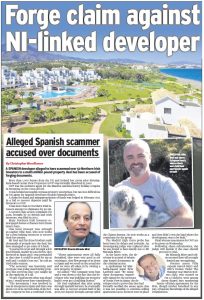 More than 1,000 buyers from the UK and Ireland lost £45m after Birmingham- based Ocean View Properties (OVP) was formally dissolved in 2009. OVP was the exclusive agent for the Manilva Gardens luxury holiday complex in Estepona on the Costa del Sol. It was behind successful overseas property enterprises, but ran into difficulties as UK agent for Spanish developer Ricardo Miranda Miret. A claim for fraud and misappropriation of funds was lodged in February 2011 in a bid to recover deposits paid by investors to OVP. It has more than 50 Northern Irish investors among 120 claimants for £9.2m. A second class action complaint for £2m, brought by 30 British and Irish investors, was filed in 2013. Many Northern Irish investors remortgaged homes to finance their dream luxury buys. One local investor was Armagh ex-teacher Ollie Reel, who now works for a firm helping investors to recover their lost money. Mr Reel and his three brothers sank thousands of pounds into the deal, but have managed to get some of it back.
